Chiltan Hazarganji National Park Quetta


Chiltan Hazarganji National Park  Quetta
Chiltan Hazarganji National Park  Quetta - http://pk212.blogspot.com/  

By : World Tour

The Hazarganji National Park was established in 1980 to provide protection to the Markhor goats whose 
number was dwindling at an alarming rate. Markhor incidentally is the national animal of Pakistan. The Park is situated 20kms south west of Quetta and covers a total area of 325000 acres. The Chiltan Hills and the Hazar Ganji Range lie in the east and west respectively hence the name. This national park is considered as one of the most important reasons for which people visitQuetta.

The Chiltan Hazarganji National Park is very popular among tourists. Besides the peaceful environs, the park also has a museum, rest house and picnic spots to entertain the visitors.

Wildlife in Chiltan Park:
One of the groups in the behalf of National Geography channel came for research on wildlife in Hazarganji Park. They explore that there are almost 800 species of wild goat the population of Suleiman Markhor is very low which is about 300-400 due to lot of hunting. The wild goat likes to live in Jungle area while the Markhor use to live at hilly area the height of mountain is 1500-200 meters.

Chiltan Hazarganji National Park  Quetta - http://pk212.blogspot.com/
There are mammals and birds founded in National Park which are, Wild goat, Suleiman Markhor, Leopard, Jackal, Porcupine, Desert hare, Deer, Red fox, Stripped hyena, Indian wolf, Urial sheep, and Caracal. While the bird species are, Lichtenstein's desert finch, Stonechat, Houbara bustard, vulture, Laggar falcon, Indian sparrow hawk, Scops owl, Common cuckoo, European bee-eater, Rock partridge, European nightjar, Orphean warbler, Griffon vulture, Egyptian vulture, and Honey buzzard. There are also reptiles in desert area of Chiltan Park which are, Saw scaled viper, Monitor lizard, Russell's viper, and Spiny tailed lizard.
The species of plant and trees found in Hazarganji are, amid juniper, pistachio, almond and ash trees.

Pakistani Mag LAFZ re-launching in the UK

Shooting for the front cover for Pakistani Mag LAFZ re-launching in the UK and I'm going to be on the 1st front cover!!
Pakistani Mag LAFZ re-launching in the UK

Popular Facts Are Actually Myths!

Sweet as Bubblegum

If you've ever accidentally swallowed your chewing gum, you can breathe a sigh of relief! Contrary to popular belief, it won't take 7 years to digest, and it will digest normally along with your other food.


Elephants' Graveyard

It is a complete myth that elephants sense when they are close to death and make their way instinctively to a place known as the elephants' graveyard where they finally lay to rest.


Birthday of Imran Khan ( Chairman PTI )


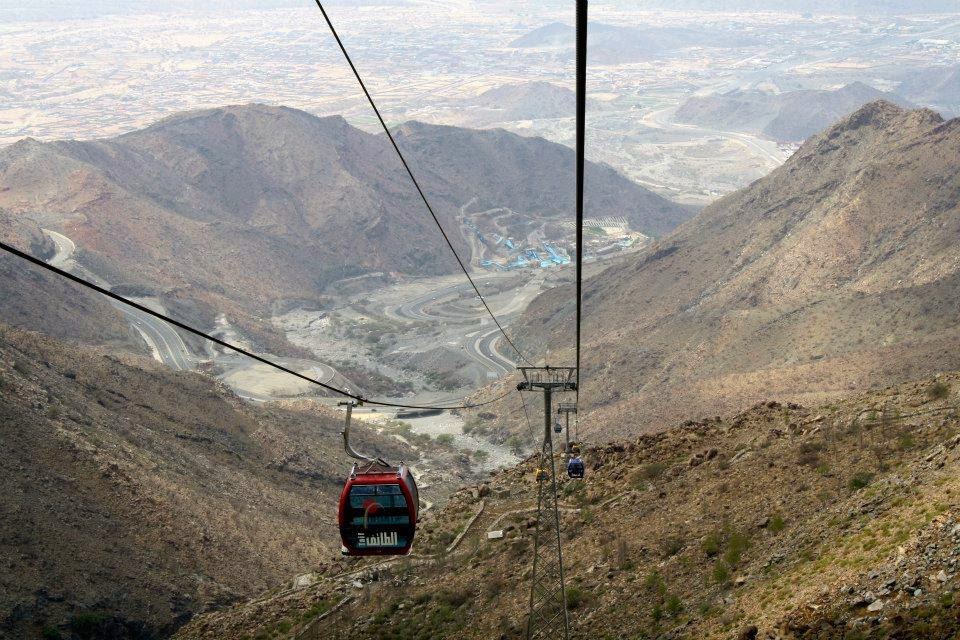
Taif - Summer Resort City OR Rose Capital of Saudi Arabia

In Saudi Arabia, roses are synonymous with the city of Taif, which is internationally famous for agriculture and in particular the cultivation and production of roses, dating back to 100 years. Stretched along the roads and streets of Taif are many vendors displaying cork boxes full of fragrant homegrown roses, fruits and other fresh produce.
In addition, the city produces rose essence and rose water, and every year the municipality and the Saudi Commission for Tourism and Antiquities organizes a rose festival, which is visited by both local and international tourists.
Rose water is usually filled into large 20 liter glass bottles for a variety of uses, especially for the making of Arabic deserts, and can be added to drinking water.

There are two types of rose water: The ordinary kind that is sold in small glass bottles for SR10 in shops and supermarkets, and a more special type that is known as “Al-Aroosa” (the bride), which is distilled rose water resulting from the production of rose essence. This type is sold in small glass bottles that cost around SR30 and is the most preferred in the Gulf. People use it as a perfume at home and sprinkle it on guests, using traditional dainty rose water pewter sprinklers.

Women also use rose water as part of their beauty regime ever since its beneficial qualities were discovered, such as cleansing of the skin and tightening of the pores.

Taif is a city that offers a rich culture of history. It is situated on the eastern area of Al-Sarawat Mountains. It is known as the summer capital of Saudi Arabia as people escape the summer heat and flock to this cool, lush city that offers beautiful scenery in a relaxed atmosphere.

Taif is also considered the favorite city to escape the hot summer days of Saudi Arabia. Situated atop the Sarawat Mountains, the visitors enjoy the cool weather and delicious fruits. They also make sure they don’t leave this cool, green and fragrant area without taking back home boxes of Taif roses, bottles of rose essence and rose water as mementos of a good and relaxing time spent in the pleasant parks of Al-Hada, Al-Shafa, Al-Ghadeer, and others.


How to be matured to be a true Pakistani Patriot

Patriotism of A Person giving Interview under the shade of armed mens's.

Patriotism is generally cultural attachment to one's homeland or devotion to one's country, although interpretations of the term vary with context, geography and philosophy. It is a related sentiment to nationalism.

How to be matured to be a true Pakistani Patriot requires little things to be noticed.


Things That Make Life Easier :)


Operation 021, New Pakistani Upcoming Movie

"Operation 021"  New Pakistani upcoming movie. After  “Waar” Shaan has always been a favorite actor for the film – makers’ fraternity.Waar breaks the record in Pakistan and even reborn of Pakistani Film Industry.
 WAAR provided a new pave for the revival of Pakistani cinema. Most of the movies were ignored and rejected by the audience for not providing a good storyline that you could enjoy with the family. Recently, directors have picked up the gear and reached the pedestal that after a decade of many years a Pakistani film name by ‘Zinda Bhaag’ is included for the Oscars nominations this time around.
Operation 201 has a star cast that includes none other than Shaan, Shamoon Abbasi, Amina Sheikh. The movie is under the production house of One Motion Pictures whose president is Zeba Baktiar and CEO is Azaan Sami Khan. The trailer released on the internet has created hype. We hope the movie is a success what Waar had created a magic for its superb direction, dialogues delievery, music score and of course by giving some powerful acting performances by the artists. We wish the team of operation 201 best wishes.
Operation 021,  New Pakistani Upcoming Movie


Operation 021,  New Pakistani Upcoming Movie


IMDB Gets Blocked in Pakistan

IMDB.com, the largest database of information on movies, TV and celebrities, is mysteriously blocked in Pakistan.
While we can confirm that website is not accessible throughout Pakistan, the reason behind the blockade is not known yet.
We have asked the concerned authorities to share with us the details of the ban on IMDB.com.

Apparently, as decided by courts earlier, if there was any objectionable material (read blasphemous) available on the website then only objectionable pages(S) was/were supposed to get blocked, not the entire website.
Inter-ministerial committee, that is the sole body responsible for taking decisions on blocking any website in Pakistan, should have considered better alternatives, such as blocking only objectionable pages – if there are any – as banning the entire website will only earn bad press for Pakistan and nothing else.
The time has come when there needs to be a regulation for censoring the internet. This Inter-ministerial committee should make public all the blocked websites and must explain the reasons for any bans to avoid misinformation and bad name of course.
We will update this post when we will have any further information (from authorities) available with us.

Pakistan's first Cubesat iCUBE-1 launched from Russia


Pakistan's first Cubesat iCUBE-1 launched from Russia
Pakistan's first Cubesat satellite, iCUBE-1, was launched on Thursday on-board Dnepr launch vehicle from Yasny launch base in Russia.
Built by the Institute of Space Technology (IST), iCUBE-1 was designed and developed at a cost of Rs3-3.5 million.
 IST Raza Butt said that it’s a positive move for technology in Pakistan.
“The world is moving towards miniaturisation. The launch cost is significantly low for CubeSats as compared to the bigger satellites. The low cost factor is very attractive for researchers who can test their payloads using these cubesats and then incorporate this technology in their bigger satellites,” he commented.
For the uninitiated, a CubeSat is a type of miniaturized satellite for space research that usually has a volume of exactly one liter (10 cm cube), has a mass of no more than 1.33 kilograms.
The cubesat will open up a wide vista of future experiments that can be carried on cubesats in the domain of imaging, microgravity, biology, nano technology, space dynamics, chemistry, space physics and various other fields. Cubesats can also provide a test bed for developing satellite constellations for specific applications.
“In addition, CubeSats need to pass the standard testing procedures which are same for all other satellites giving it’s manufacturers the confidence of building and launching bigger satellites,” he informed.
A team of around 20 faculty members and 15 students worked on the project which was initiated in 2009.
ICUBE-1 is expected to be operational for a period of 2 years. It is a low earth polar orbit at an altitude of 600km.
Pakistan's first Cubesat iCUBE-1 launched from Russia
Sharing an interesting observation during the development of the project, Butt said: “It was interesting that during launch integration, the team had interaction with developers from other countries, such as Italy, Spain, USA and Peru. They were excited. A number of them are open to collaboration with IST on future cubesat missions.”
APP adds:
The Institute of Space Technology has achieved this astounding success in a short span of ten years, owing to the concerted efforts by its leadership, students and faculty to standout in this field and to create a national center of excellence in space technology.
Vice Chancellor IST, Engr. Imran Rahman congratulated 'Team IST' for this great achievement.
He specifically thanked the Federal Minister for Planning, Development and Reforms, Prof. Ahsan Iqbal, Chairman HEC and Chairman of National Space Agency for their continuous encouragement, support and help in achieving this milestone.
Talking to APP, Spokesperson IST Raza Butt said “iCUBE-1 has been launched in a polar orbit, 600 Km above the surface of the Earth, and is designed to take low resolution images of Earth and other space objects.”
Initially, iCUBE-1 will transmit a Continuous Wave Morse coded beacon with message “iCUBE-1 First CubeSat of Pakistan”.
Amateur radio operators have a great opportunity to hear those signals on the VHF band. iCUBE-1 has a mass of 1.1 Kg and is thus categorized as a pico-satellite.
The satellite has a volume of 10cm cube and it houses several sensors to collect data for scientific purposes. iCUBE-1 is a fully autonomous satellite and is capable of maintaining its health via its on-board computer.
Pakistan's first Cubesat iCUBE-1 launched from Russia
The satellite will send its health data to ground stations and can also be commanded from Satellite Tracking and Control Station at IST.

Fawara Chowk Raja Bazar Rawalpindi Incident

They call themselves as Shia!
They call as Sunni!
They also call as they are the "Muslims"

They just make us confused with their tricky statements and target our most important and core religious areas and take advantages of our sects to create hatred and disturbance in "Pakistani Nation".

Those who kill the innocent people cannot be "Muslims".

As a Pakistani and Muslim we "Must Understand that this type of terrorist activity is not from "sunni" or "shia" its simply to take advantage of "Sects" and their differences to generate violence.

Rawalpindi incident is "Painful" and we must discourage it at every level.


"Arafat" Poinsoned to Death -A report by Swiss Forensic

Results revealed "a real crime, a political assassination".
Swiss reports the death of " Arafat a Poisoning Death".  this is confirmed with no doubt that his death was not a normal death instead he was given poison.It is scientifically proved that he didn't die a natural death and we have scientific proof that this man was killed."
The Swiss report said tests on the body showed "unexpected high activity" of polonium, which "moderately" supported the poisoning theory.Many Palestinians and others have long believed that Israel poisoned Arafat. Others allege that he had Aids or cancer. Israel has consistently denied any involvement.
A spokesman for the Israeli foreign ministry said the Swiss investigation was "more soap opera than science".
Reuters said she did not name any suspects and acknowledged that her husband had had many enemies in his lifetime.

The scientists have made "a pretty strong statement", according to Prof Paddy Regan, an expert in radiation detection and measurement at the University of Surrey in the UK, who was not involved in the investigation.
"They are saying the hypothesis that Arafat was poisoned with polonium-210 is valid and has not been disproven by the data. However they cannot say definitively that he was murdered."
Arafat, who led the Palestine Liberation Organisation for 35 years and became the first president of the Palestinian Authority in 1996, fell violently ill in October 2004 at his compound.
Two weeks later he was flown to a French military hospital in Paris, where he died on 11 November 2004, aged 75.
France began a murder inquiry in August 2012 after the Lausanne scientists, working with an al-Jazeera documentary crew, found traces of polonium-210 on Arafat's personal effects.
His widow had objected to a post-mortem at the time of his death, but asked the Palestinian Authority to permit the exhumation "to reveal the truth".
His remains were removed from his tomb in the West Bank city of Ramallah in November 2012 and reinterred the same day.
Last month, the head of the Russian Federal Medico-Biological Agency, Vladimir Uiba, was quoted by the Interfax news agency as saying that Arafat "could not have been poisoned with polonium", saying that test carried out by Russian experts "found no traces of this substance".
However, the agency later denied that Mr Uiba had made any official statement on the findings.
The head of the Palestinian investigation team, Tawfiq Tirawi, confirmed on Tuesday that the Russian and Swiss reports had been delivered. The Palestinian team is reported to have handed over its findings on Saturday.


Bahauddin Zakariya

The society and culture of Pakistan (Urdu: ثقافت پاکستان) comprises numerous diverse cultures and ethnic groups: the Punjabis, Kashmiris, Sindhis in east, Muhajirs, Makrani in the south; Baloch and Pashtun in the west; and the ancient Dardic, Wakhi, and Burusho communities in the north. These Pakistani cultures have been greatly influenced by many of the surrounding countries' cultures, such as the Turkic peoples, Persian, Arab, and other South Asian ethnic groups of the Subcontinent, Central Asia and the Middle East.
In ancient times, Pakistan was a major cultural hub. Many cultural practices and great monuments have been inherited from the time of the ancient rulers of the region. One of the greatest cultural influences was that of the Persian Empire, of which Pakistan was a part. In fact, the Pakistani satraps were at one time the richest and most productive of the massive Persian Empire. Other key influences include the Afghan Empire, Mughal Empire and later, the short-lived but influential, the British Empire.
Pakistan has a cultural and ethnic background going back to the Indus Valley Civilization, which existed from 2800–1800 B.C., and was remarkable for its ordered cities, advanced sanitation, excellent roads, and uniquely structured society. Pakistan has been invaded many times in the past, and has been occupied and settled by many different peoples, each of whom have left their imprint on the current inhabitants of the country. Some of the largest groups were the Proto-Indo-Aryans, of which Sindhis and Punjabis descend from and later Iranic peoples which the Baloch and Pashtuns descend from. Other less significant ones include the Greeks, Scythians, Persians, White Huns, Arabs, Turks, Mongols, Buddhists, and other Eurasian groups, up to and including the British, who left in the late 1940s.
The region has formed a distinct cultural unit within the main cultural complex of South Asia, the Middle East and Central Asia from the earliest times, and is analogous to Turkey's position in Eurasia. There are differences in culture among the different ethnic groups in matters such as dress, food, and religion, especially where pre-Islamic customs differ from Islamic practices. Their cultural origins also reveal influences from far afield, including Tibet, Nepal, India, and eastern Afghanistan. All groups show varying degrees of influence from Persia, Turkestan and Hellenistic Greece. Pakistan was the first region of South Asia to receive the full impact of Islam and has developed a distinct Islamic identity, historically different from areas further west.

Diwan-e-Khas: the hall of special audience with the emperor

Bahauddin Zakariya
Ancient sites in Pakistan include: Zoroastrian Fire temples, Islamic centres, shi'a shrines/Sufi shrines, Buddhist temples, Sikh, Hindu, and pagan temples and shrines, gardens, tombs, palaces, monuments, and Mughal and Indo-Saracenic buildings. Sculpture is dominated by Greco-Buddhist friezes, and crafts by ceramics, jewellery, silk goods and engraved woodwork and metalwork.
Pakistani society is largely multilingual, multi-ethnic and multicultural. Though cultures within the country differ to some extent, more similarities than differences can be found, as most Pakistanis are mainly of Aryan heritage or have coexisted side by side along the Indus River for several thousand years, or both. However, over 60 years of integration, a distinctive "Pakistani" culture has sprung up, especially in the urban areas where many of the diverse ethnic groups have coexisted and ithe country now having a literacy rate of 55%, up from 3% at the time of independence. Traditional family values are highly respected and considered sacred, although urban families increasingly form nuclear families, owing to socio-economic constraints imposed by the traditional culture of the extended family.
The past few decades have seen emergence of a middle class in cities such as Karachi, Lahore, Rawalpindi, Hyderabad, Quetta, Faisalabad, Sukkur, Peshawar, Sialkot, Abbottabad, and Multan. Rural areas of Pakistan are regarded as more conservative, and are dominated by regional tribal customs dating back hundreds if not thousands of years.
"Pakistan's culture is again unique like the rest of the country. Pakistan's geography is the meeting point of South Asia, Central Asia and West Asia/Gulf. Its culture could be termed as a combination of sub continental, Islamic, Regional, English, and more recently global influences. Let us consider them piecemeal. The newly born Pakistan had to have a sub continental leaning, having been a part of for last 5000 years of its civilization. However, the Indus Valley, present day Pakistan, culture was different from the rest of North India or South India". (Quoted Pakistan's Identity, History and Culture, from the famous book Gwadar on the Global Chessboard by Nadir Mir)

Hakimullah Mehsud Killed - A big set back to the Peace Process and the Dialogues with the Taliban's

Now what you call the "Killing of Hakeem-Ullah Mehsood". A big set back to the Peace Process and the Dialogues with the Taliban's?


Who are these "Pakistan Taliban's" what's the reality and the origination of  these Taliban's. The Right answer the this question is a "Complex". Because when you see the it analytically you see a great International Influence on Pakistan.Everything correlates and USA and Other European Countries and India plays a great role. Political instability have great concerns with the "Security".
 
No doubt about it the "Nation" must be so united and on own footings financially,infrastructures and policies wise with having the internal unity. Financial stability of a country depends upon the internal money circulations and business improvements.Things require time to be upgraded and reorganized towards right path.

With such a derailing situation and such killings create more problems for Pakistan.


Brief History of Hakimullah Mehsud

Hakimullah Mehsud (Pashto/Urdu: حکیم‌ الله محسود; c. 1979 − 1 November 2013), born Jamshed Mehsud (جمشید محسود) and also known as Zulfiqar Mehsud (ذو الفقار محسود), was the Emir of Tehrik-i-Taliban Pakistan (TTP). He was deputy to commander Baitullah Mehsud and one of the leaders of the militant group Fedayeen al-Islam prior to the elder Mehsud's death in a CIA drone missile strike.He had been the TTP's commander in the Khyber, Kurram and Orakzai agencies of Pakistan. He was described as being born about 1979 and a cousin of Qari Hussain. He was known to be a young and aggressive field commander, who previously served as a driver and was very close to Baitullah Mehsud. Hakimullah Mehsud maintained ties to al-Qaeda, the Afghan Taliban and various Pakistani jihadist groups, such as Lashkar-e-Taiba, Lashkar-e-Jhangvi, and Jaish-e-Mohammed. Reports initially indicated he was fatally wounded on 14 January 2010 by a US drone attack although two videos released by the TTP in 2010 and 2011 proved that he survived the attack. Mehsud was reported by Pakistani intelligence to have been killed by US drone strike on 12 January 2012. However, the Pakistani Taliban denied the claim.It was confirmed that he was killed in a drone strike on 1 November 2013


NUST Pakistan's Top Ranked Engineering University

National University of Sciences and Technology (NUST) is a premier national institution that has won global acclaim within a short span of time. Various constituent schools and colleges functioning under the umbrella of NUST are imparting high quality education at both undergraduate and postgraduate levels in the disciplines of Engineering, Management and Social Sciences, Information Technology, Medicine and Basic Sciences.
In order to address higher education needs of the country, NUST has made monumental strides thus drawing appreciation from across the world. Needless to say, it is because of the high teaching and research standards maintained at NUST that numerous reputed foreign universities are working in collaboration with the University on various projects of mutual benefit.Moreover, the expansion of facilities at NUST new campus, located in the tranquil setting of the federal capital, helps ensure conducive environment to cater for the educational needs of a large number of talented students.

NUST is a multi-campus university spread all over Pakistan. Its central campus is in Islamabad with other campuses at Rawalpindi, Risalpur and Karachi. 
The CENTRAL CAMPUS has been established at Sector H-12, Islamabad to cater for the fast-growing requirements of a technologically advanced campus of science and technology. Besides the Rectorate, new high-tech postgraduate schools, centers and institutes have been established at this campus. Undergraduate and postgraduate programs have commenced from Fall 2008 and a number of new programs are planned to commence from Fall 2013.  

There are three campuses in Rawalpindi:    
  
     Army Medical College (AMC) 
     College of Electrical and Mechanical Engineering (CEME) 
     Military College of Signals (MCS) 
     NUST Institute of Peace and Conflict Studies (NIPCONS) 
There are two campuses in Risalpur:
    College of Aeronautical Engineering (CAE) 
    Military College of Engineering (MCE) 
 Karachi Campus:
Pakistan Naval Engineering College (PNEC)


The CENTRAL CAMPUS houses the following:     
     Rectorate     
     NUST Business School (NBS)  
     School of Art, Design and Architecture (SADA) 
     School of Chemical and Materials Engineering (SCME)
     School of Civil and Environmental Engineering (SCEE)
              National Institute of Transportation (NIT)
              Institute of Environmental Science and Engineering (IESE)             
              Institute of Geographical Information Systems (IGIS)
              NUST Institute of Civil Engineering (NICE)
     School of Electrical Engineering and Computer Science (SEECS)
              Research Institute of Microwave and Millimeter-Wave Studies (RIMMS)  
     School of Mechanical and Manufacturing Engineering (SMME) 
     Atta-ur-Rahman School of Applied Biosciences (ASAB)  
     Research Center for Modeling and Simulation (RCMS) -- View Site
     School of Natural Sciences (SNS) 
     Center for Energy Systems (CES)
     NUST Institute of Leadership in Education (NILE) 
      Center for Counseling and Career Advisory (C3A)