
Football News, 7 Goals : Poor Brazil humiliated badly by Germany
Germany attacked in a very surprising way from the very
start and Mullers Hits first goal very soon. Its Astonishing, humiliating and
devastating - No one expected such a match ever in the history of FIFA in
semifinal rounds. It looked like Germany Vs Infants. Take a
goal-by-goal look at Germany's destruction of Brazil at the World Cup.
Germany attacked in a very surprising way from the very
start and Mullers Hits first goal very soon. Its Astonishing, humiliating and
devastating - No one expected such a match ever in the history of FIFA in
semifinal rounds. It looked like Germany Vs Infants. Take a
goal-by-goal look at Germany's destruction of Brazil at the World Cup.
1-0 Thomas Muller 10mins 21sec
Alan Hansen: "Mats Hummels moves Dante as the corner comes in. David Luiz loses Thomas Muller and gets blocked by Miroslav Klose in a well-worked corner, but again Brazil should do better."

Alan Shearer: "That is worked on the training ground. That does not just happen on the night."
Rio Ferdinand : "I would not be happy to concede a goal like that but you have to admire the attacking play."
2-0 Miroslav Klose 22min 08sec
Alan Shearer: "Klose is in the right place at the right time. He gets a little bit of luck because of the lack of reaction from Marcelo, who is having an absolute nightmare."

3-0 Toni Kroos 23min 58sec
Which of These Mistakes Do You Make — That Successful People Don’t?

By: Bernard Marr
No matter what you want to succeed at in life—your career, a hobby,
your personal life—there are a few universal truths that can be applied
to the pursuit of success, and a few mistakes that can be considered
universal barriers to achieving it.
As I’ve watched and
studied successful people in my life, I’ve noticed five mistakes that
they seem to be able to avoid at any cost.
Do you fall into the trap of any of these mistakes? If so, you may be putting roadblocks on your own path to success
Mistake 1. Avoid responsibility
“The price of greatness is responsibility.” –Winston Churchill
One of the first things you will notice that successful people don’t
have is a blaming or victim mentality. When things go wrong, what is
your first response? Successful people won’t say, “I couldn’t succeed
because of X, Y, and Z” or “It’s actually this person’s fault.” They’re
much more likely to own a mistake rather than blame others for their
failure or misfortune. I believe the key here is that by owning a
mistake, we are more likely to learn from it and much less likely to
repeat it.

Pakistan Telecommunication Company Limited ( PTCL ) Adopts SAP
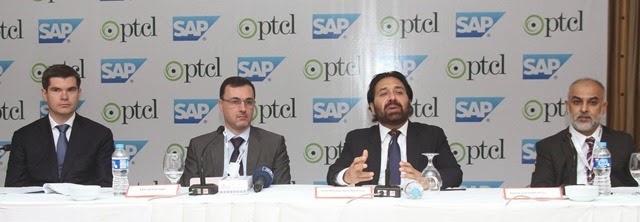
Pakistan Telecommunication Company Limited (PTCL) announced that it is adopting cloud computing technology for its HR operational processes.
In the first deal of its kind in the country, PTCL will employ a series of solutions from SAP company “Success Factors” to streamline vital HR processes aimed at boosting employee productivity.
The move is set to add additional momentum to the company’s ambitious and expansive business strategy, which recently helped deliver a 31 per cent increase in the first quarter as compared to the same period of last year.
“The telecommunications market in Pakistan is fiercely competitive, and only those with the vision and ability to adapt with latest technology specially with people’s capability management will stand out. PTCL HR & IT has decided to implement state of the art systems to boost up the capability development of employees and feels immense pleasure and pride to be the first company in Pakistan to introduce one of the best internationally recognized talent management solution “Success factor” in the company (whoever will be present in the conference).
Qualities of a Great Project Manager

There are many abilities and traits that you are obligated possess if you intend to be a successful project manager, and one of your duties is to constantly improve your knowledge and skills in order to execute your projects. It can be hard to be a good project manager, but you should strive to be a great manager, and because of that, we are offering you a list of things you need to work on, if you are planning on being the best there is.
Natural leader
This is probably one of the more important things, and it will help you in many situations in your everyday life, but first, it will be important to know the difference between a project leader, and being a project manager. Both of these jobs involve making sure that all the tasks are being done, and that the project is going the direction it is supposed to. The difference is somewhat explanatory in the name itself - the leader prepares the people for their roles and different situations that are not necessarily within their experience, and is good at motivating people, whereas the manager only works within the boundaries set by those people and can manage their skills, their time, and he or she will only apply solutions that are tried and true. When you really understand this difference, you’ll understand that while project leaders are more idealistic, you should be more pragmatic.
How to Loose FAT Belly

Before you can start getting rid of belly fat for good you must recognize how important it is to adopt a change to your lifestyle. Losing stomach fat successfully means not only losing your belly now but keeping it off for good. Crash diets might offer a short term solution, but when you stop the diet and go back to your old habits, you will probably put all the weight back on again.
1. Blended Drinks.
You can make some terrific drinks with a blender that are excellent for getting rid of belly fat. Blended drinks are a great way to integrate fresh fruits into your diet and provide a delicious, high-fibre way to drink your breakfast. You simply mix any combination of your favorite fruits in season. Good choices are fruits like berries, oranges, bananas, and peaches. You can also add orange juice, dry milk powder or yogurt for a protein boost. Blended drinks provide a quick and refreshing breakfast and get your whole system ready for the day.
2. Use Fewer Sauces and Dressings.
Using fewer sauces and dressings on your food is a simple way to lose stomach fat. Sauces and dressings are typically made with oil or have lots of sugar.
If you smother your green salad in dressing or cover your baked potato in sour cream it will add a lot of fat and calories to your meal. Try using alternatives, such as non-fat sour cream, and try out different spices to flavor your food.
3. Have Breakfast.
Generally speaking, getting rid of belly fat is a lot easier for people who eat a nutritious breakfast than those who do not. When you wake up in the morning your body has gone into a fasting mode because you have not had anything to eat since the night before. Breakfast ('break' the 'fast') breaks that period and keeps your metabolism stabilized. If you skip breakfast and don't eat anything for another four or more hours, your body will start to enter starvation mode, and you are much more likely to eat way too much lunch or binge on high-calorie snacks.
4. Do Exercise That You Enjoy.

5. Allow Yourself Occasional Treats.
If you do have the occasional treat or break from routine it does not mean that you have to start trying to find another way on how to lose stomach fat. If you never have a treat you are going to crave that food even more and that will throw your diet completely off track. Just have treats in moderation, and you will be fine. A break can actually do you a lot of good, provided of course that you get back to your new healthy lifestyle in a reasonable time and don't slip back to your old habits
By : By: Jon Allo at http://www.populararticles.com
Mr. Shoaib Ahmed Shaikh - Chairman & CEO of Axact & BOL Network

Link for details : http://vimeo.com/92325751
Axact’s Chairman and CEO Mr. Shoaib Ahmed
Shaikh held a huge audience mesmerized as he spoke about Axact’s dream
for a prosperous and a thriving Pakistan at the Team Meet 2013-14. He
explained how Axact will educate 10 million Pakistani children
Free of Cost. He ended his speech with the powerful message of his own
journey from a life of humble beginnings to heights of glory, adding
that Pakistanis could realize the same vision for their country if they
set their hearts and minds to it.
For more than 15 years, Axact has provided
quality IT related products & services to new
and existing Axact customers to help increase
their productivity. Since its inception in 1997,
Axact has grown by leaps and bounds to reach
a position where it enjoys a global presence in
more than 100 countries, with a strong
workforce of 5,200 employees and associates
worldwide.
The company currently operates in Karachi, Islamabad and Dubai with eight business units and products, and more than 8.3 millioncustomers worldwide. At present, Axact remains the largest exporter of IT products & services in Pakistan.
The company currently operates in Karachi, Islamabad and Dubai with eight business units and products, and more than 8.3 millioncustomers worldwide. At present, Axact remains the largest exporter of IT products & services in Pakistan.

BOL with its visionary leadership is bringing the best practices in the
media industry to the forefront via state-of-the-art infrastructure,
automated systems & processes, and above all by offering an
unmatched lifestyle and salary packages that are far above the industry
average to its employees. All this will bring about visible changes in
the lives of every individual, presenting a developed Pakistan to the
whole world.


“If you come here after one and a half years, you will see a river of
solar panels, residential buildings and offices — it will be a new
world,” said site engineer Muhammad Sajid, pointing towards the surrounding desert.
This is big news for a country suffering from chronic energy
shortages that leave people without power for large chunks of the day on
a regular basis. And then there’s the nearly half of the households
that aren’t even connected to the grid, according to a World Bank study. When temperatures soar in the summer, electricity demand can fall short by around 4,000 megawatts.
At the inauguration, the prime minister said
“the dearth of electricity has pushed the country backwards and its
entire industry and agriculture sector have suffered immensely.”
Pakistan is one of the most vulnerable
countries in the world to the impacts of climate change due to its
location, population, and environmental degradation. A recent study
in the journal Nature Climate Change found that people are already
migrating out of the Pakistan for climate-related reasons such as
flooding and heat stress, which have negative effects on agriculture and
can prove very costly.
“We need energy badly and we need clean energy, this is a sustainable
solution for years to come,” Imran Sikandar Baluch, head of the
Bahawalpur district administration in Punjab where the plant is located,
told
the AFP. “Pakistan is a place where you have a lot of solar potential.
In Bahawalpur, with very little rain and a lot of sunshine, it makes the
project feasible and more economical.”
At a meeting shortly after the inauguration, Sharif approved
expanding the project from from 10,000 acres to 15,000 acres and
increasing the capacity from 1,000 megawatts to 1,500 megawatts.
Shrek The Sheep

This is Shrek the sheep. He became famous several years ago when he was found after hiding out in caves for six years. Of course, during this time his fleece grew without anyone there to shorn (shave) it. When he was finally found and shaved, his fleece weighed an amazing sixty pounds. Most sheep have a fleece weighing just under ten pounds, with the exception usually reaching fifteen pounds, maximum. For six years, Shrek carried six times the regular weight of his fleece. Simply because he was away from his shepherd.
This reminds me of John 10 when Jesus compares Himself to a shepherd, and His followers are His sheep. Maybe it’s a stretch, but I think Shrek is much like a person who knows Jesus Christ but has wandered. If we avoid Christ’s constant refining of our character, we’re going to accumulate extra weight in this world—a weight we don’t have to bear.
When Shrek was found, a professional sheep shearer took care of Shrek’s fleece in twenty-eight minutes. Shrek’s sixty pound fleece was finally removed. All it took was coming home to his shepherd.
I believe Christ can lift the burdens we carry, if only we stop hiding. He can shave off our ‘fleece’—that is, our self-imposed burdens brought about by wandering from our Good Shepherd.
“Come to Me, all you who are weary and burdened, and I will give you rest. Take My yoke upon you and learn from Me, for I am gentle and humble in heart, and you will find rest for your souls. For My yoke is easy and my burden is light.” Matthew 11:28-30
Ref : http://
Which Oil Majors Have the Greatest Exposure to Russia?
" 3D Printer" New Dimension in the Printing World : By Autodesk
" Mohammad Zahoor" A Pakistani Based Billionaire in Ukraine
ABB Partners with Changan Ford to Boost Chinese Carmaker’s Flexibility
ABB Partners with Changan Ford to Boost Chinese Carmaker’s Flexibility
.jpg)
2014-05-20 - Long a car-industry mantra, “flexible production” becomes a reality at Chinese automobile plant _ with help from ABB Robotics
It takes just 18 seconds for the Ford Motor Co. and its partner, Changan, to switch between vehicle models on a production line where ABB robots ensure one of China’s biggest carmakers can react quickly to shifting consumer sentiment, rising demand and a changing economy.
To put those 18 seconds in perspective, the joint venture’s plant in Chongqing, in southwestern China, can go from making Ford Mondeos (in the U.S., think Fusions) to any one of as many as five different models faster than sprinter Usain Boltruns the 200 meters.
ABB’s robots also ease introduction of completely new models to the line, too, an advance from traditional production lines that required more extensive work before a new model could be added – hardly ideal if consumers’ tastes change quickly.
“Flexible production,” a car-industry mantra since the 1990s, is becoming a necessity in China and the rest of the world as auto manufacturers accommodate customer expectations that can turn faster than prices at the gas pump while ensuring factories are prepared for sweeping demand swings like the one that accompanied the Great Recession.
“The economic downturn has been tough on automakers and highlighted the need to be more adaptive to the demands of the market,” said Yuan HenXin, Manufacturing Engineering Manager for Changan Ford. “This is especially true when it comes to being able to respond quicker to changes in customer preference, as well as remain competitive in a fierce industry.”
How fast?
Changan Ford, with its facilities 900 miles upstream from Shanghai on the Yangtze River in one of China’s auto manufacturing hubs, is actually an expansion of a long partnership between Ford and ABB Robotics. It’s already boosted flexibility of the carmaker’s operations.
In 2012, for instance, ABB Robotics installed a Tube Press and Weld System to make axles and gears for the F-150 Pickup truck, among other vehicles, at the Ford Sterling Axle Plant in Sterling Heights, Mich. Now, a complete changeover between axle types can be completed in less than 43 seconds _ not as fast as Bolt’s 200, maybe, but faster than Michael Johnson’s 400-meter world record.
" Mohammad Zahoor" A Pakistani Based Billionaire in Ukraine - Meeta A Businessman - EP - 000

While it may look strange and self-serving for the Kyiv Post to declare its publisher the richest foreigner in Ukraine, Mohammad Zahoor certainly appears to have earned the title. If anyone knows of another expatriate worth between $500 million and $1 billion, the estimated size of Zahoor’s fortune, please let us know and we will set the record straight.
Zahoor certainly didn’t get where he is today – namely, wealthy – by owning the Kyiv Post. Zahoor punched his ticket the hard way: making steel in rough-and-tumble Donetsk. He came to Ukraine in 1974 as a student from Pakistan, the start of his pioneering expatriate career.

He learned Russian and metallurgy well. Then he eventually found a way to apply those skills in Ukraine, one of the world’s top 10 steel-exporting nations.
Zahoor also displayed a talent for knowing when to get out of a business, as he did in 2008 by selling his Donetsk steel mill for a top-drawer price of $1 billion.
Zahoor is now the chairman and owner of the ISTIL Group, which went on an asset-buying spree in the last two years, including the small (for him) purchase of the Kyiv Post in 2009 for $1.1 million from its founder, American Jed Sunden.
Zahoor left Karachi, Pakistan, to study metallurgy in Donetsk in 1974.
He worked in Pakistan after graduating, but made Ukraine his home after working in Moscow, making frequent business trips to secure metals contracts.
At that time, Zahoor and a Thai businessman were running Metalsrussia, a Hong Kong-registered trading company based in Moscow.
“It was luck, of course, being at the right place at the right time, and my strong knowledge of the market.”
- Mohammad Zahoor.
It soon became the main trader of Russia’s Cherepovets metallurgy factory.
Which Oil Majors Have the Greatest Exposure to Russia? By Arjun Sreekumar


As Vladimir Putin continues to test the limits of the Western world's patience with aggressive actions in Ukraine, investors are growing increasingly concerned about Western energy companies' exposure to Russia. With the threat of additional sanctions against Russia looming large, let's take a closer look at some of the major Western integrated oil companies that have the most at stake in the country.
BP: the most exposed oil major Of all the large Western oil majors, BP plc (NYSE: BP ) is the most heavily exposed to growing geopolitical risk in Russia through its 19.75% stake in Rosneft. BP acquired the stake back in 2012 in exchange for selling its 50% interest in TNK-BP, one of Russia's biggest oil companies, to Rosneft -- a deal that also brought in $12.5 billion in cash for the British oil giant.
Geopolitical risk aside, the deal has so far been extremely beneficial to BP. In the fourth quarter, Rosneft accounted for about nearly 36% of BP's underlying profit of $2.8 billion. It also contributed production of 985,000 barrels of oil equivalent per day, or boe/d, representing about 30% of companywide fourth-quarter production of 3.2 million boe/d.
So far, BP's business hasn't been affected by Western sanctions, which have mainly included visa bans and asset freezes on Russian individuals and a Russian bank. But some worry that if geopolitical conditions worsen, the West could enforce additional measures aimed at crippling the Russian economy, including sanctions against Russia's energy sector, which would jeopardize BP's close relationship with Rosneft.
Michael Collins Takes Picture of moon from Space

This picture was taken by the astronaut, Michael Collins. He took this
photograph from the shuttle in which he was circling the moon. The
vehicle Eagle with the other two astronauts, Neil Armstrong and Edwin
Aldrin, is seen about to land on the moon. Our Planet, Earth is also
seen in the picture besides the surface of the moon. This has to be the
only picture where every human that existed on earth at that time
(together with the two astronauts in the Eagle) are present in one
particular frame, except of course the photographer, Michael Collins!
Perhaps if he had a smart phone he could have managed a selfie with
everyone else in the background.
Siemens to Sell Transformer Business in Pakistan

Siemens Pakistan Engineering Company announced on Monday that the it had decided to sell its transformer business.
The company, a giant on the KSE’s general industrial sector with Rs17bn in total assets, had also agreed “in principle, the sale of company’s land and buildings situation at Estate Avenue, Sindh Industrial Trading Estate Karachi, Pakistan in one or more parcels.”
The decision to cast away the transformer business was made in the meeting of the board on March 1. Siemens pointed out that the sale of the said transformers business, land and building was subject to the board’s final approval and consent of the shareholders as well as of any other applicable regulators.
That Siemens should sever one of the principal arm of operations seemed surprising to the market.
Yet, people in the industry said that the development looked like a step in the restructuring, rightsizing, and portfolio adjustment activities initiated by the company last year.
The annual accounts for the year ended Sept 30, 2013 revealed that the company had incurred employee separation cost of Rs464 million which significantly affected profit of the company.
For FY13, Siemens incurred loss before tax amounting to Rs821m. Net sale also declined in 2013 to Rs13bn, from Rs13.8bn YoY.
Directors explained that the main reasons for the loss were termination of a major contract by Civil Aviation Authority (CAA) and restructuring and process optimisation activities which continued throughout the year.
Siemens Pakistan is noted to be “principally engaged in the execution of projects under contracts and in manufacturing sales and installation of electric and electrical capital goods.”
During FY2013, new orders of Rs12.4bn were received by the company. The main contributor to the new orders was stated to be the energy segment with 57pc share which included orders for design, erection, testing and commissioning of 220kV and 132kV substations and supply of transformers to public utilities.
In Nov last year, Siemens Pakistan had re-purchased its own shares. It was a silent, ‘off-market’ deal of 0.716 million shares, valued at $8.47 million. Market players speculated the buyer was the parent company, Siemens AG Germany, which already holds 66.10 per cent of its Pakistani subsidiary’s stock.
The company, a giant on the KSE’s general industrial sector with Rs17bn in total assets, had also agreed “in principle, the sale of company’s land and buildings situation at Estate Avenue, Sindh Industrial Trading Estate Karachi, Pakistan in one or more parcels.”
The decision to cast away the transformer business was made in the meeting of the board on March 1. Siemens pointed out that the sale of the said transformers business, land and building was subject to the board’s final approval and consent of the shareholders as well as of any other applicable regulators.
That Siemens should sever one of the principal arm of operations seemed surprising to the market.
Yet, people in the industry said that the development looked like a step in the restructuring, rightsizing, and portfolio adjustment activities initiated by the company last year.
The annual accounts for the year ended Sept 30, 2013 revealed that the company had incurred employee separation cost of Rs464 million which significantly affected profit of the company.
For FY13, Siemens incurred loss before tax amounting to Rs821m. Net sale also declined in 2013 to Rs13bn, from Rs13.8bn YoY.
Directors explained that the main reasons for the loss were termination of a major contract by Civil Aviation Authority (CAA) and restructuring and process optimisation activities which continued throughout the year.
Siemens Pakistan is noted to be “principally engaged in the execution of projects under contracts and in manufacturing sales and installation of electric and electrical capital goods.”
During FY2013, new orders of Rs12.4bn were received by the company. The main contributor to the new orders was stated to be the energy segment with 57pc share which included orders for design, erection, testing and commissioning of 220kV and 132kV substations and supply of transformers to public utilities.
In Nov last year, Siemens Pakistan had re-purchased its own shares. It was a silent, ‘off-market’ deal of 0.716 million shares, valued at $8.47 million. Market players speculated the buyer was the parent company, Siemens AG Germany, which already holds 66.10 per cent of its Pakistani subsidiary’s stock.
Subscribe to:
Posts (Atom)